The loop closes
For a long time while building Caelwick, stepping into the tower was strictly a one-way trip. You gathered your squad, went in through the portal, and fought until you cleared the floor or wiped. It worked for testing combat mechanics, but it didn't feel like the game I wanted to make. It felt like an arcade gauntlet rather than a true expedition.
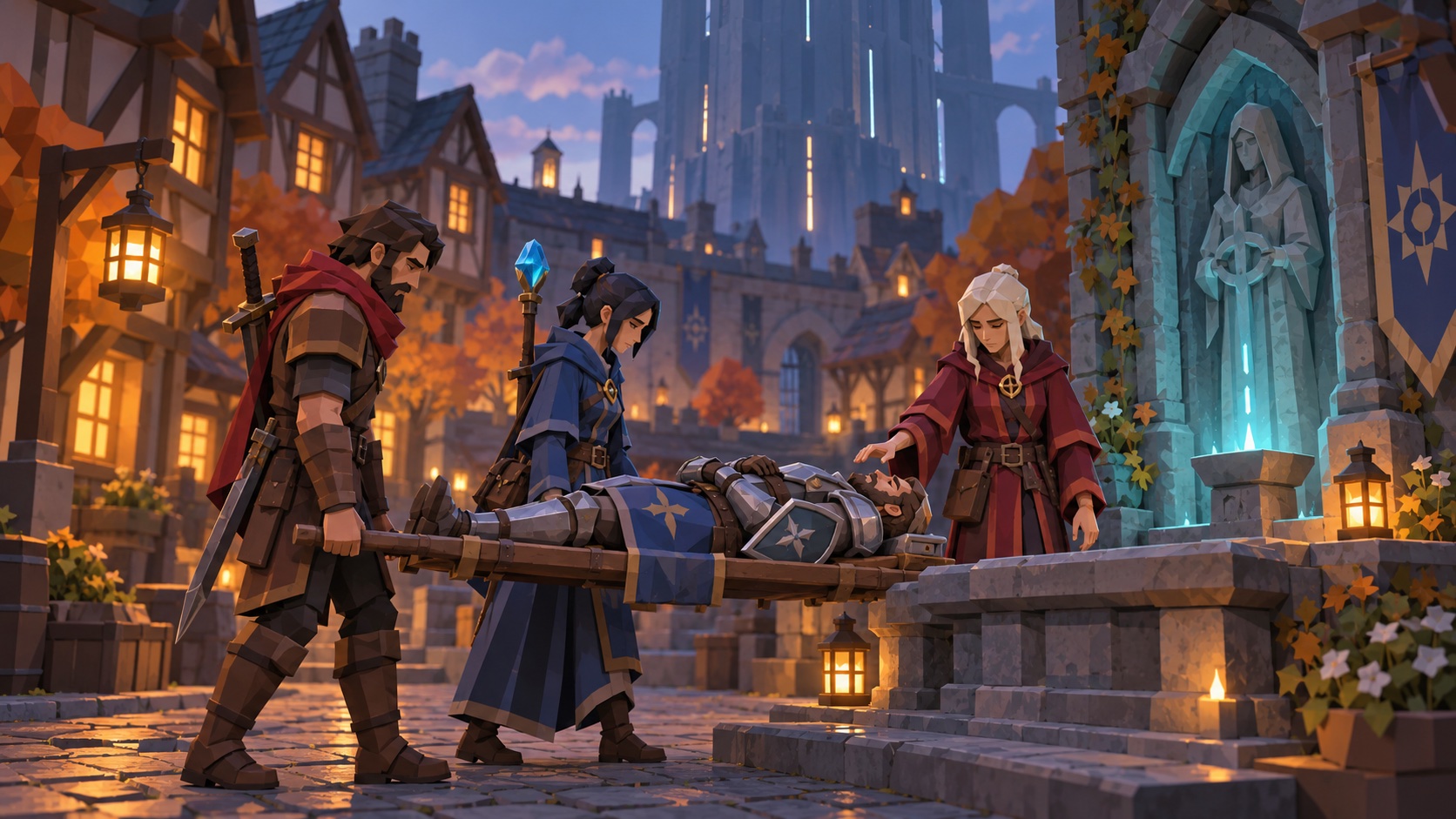
That gap is finally closed. At any secured stair landing in the tower, you can now open the expedition menu and choose to leave. You gather what you've found, pick up whoever has fallen, and head down the stairs back to Caelwick.
Underneath the hood, this required a major shift in how the game thinks about progress. A save file is no longer just a snapshot of a single isolated run that vanishes when the party dies. It's now a full campaign: a persistent roster of heroes living in town, a shared stash of equipment and supplies, your chosen campaign rules, and the active expedition currently climbing the tower.
flowchart LR
  accTitle: The expedition loop
  accDescr: A party prepares in Caelwick, climbs the tower, carries its fallen home, resurrects them at the shrine, and sets out again.
  Town[Prepare in town] --> Tower[Climb the tower]
  Tower --> Home[Retreat home]
  Home --> Shrine[Tend to the fallen]
  Shrine --> Town
The drama of a fallen comrade
The moment you can choose to turn back, death in combat takes on a completely different meaning.
When a hero drops in the tower, they don't immediately vanish or trigger a game-over screen. They are simply fallen. Campfires on the climb can bandage wounds and restore energy to the living, but nothing in the dark reaches of the tower can bring back someone who has fallen. If you want them to survive, their companions have to carry them all the way home.
That changes the psychological weight of every encounter. Imagine you're two floors up. Your Shield Warden just went down in a brutal clash with an elite monster, your Wellspring is running dangerously low on healing charges, but you spot a promising doorway down the corridor. Do you risk another encounter with only three conscious fighters, or do you swallow your pride and haul your friend down the stairs to safety?
That quiet tension—the walk back toward town with a wounded party—is one of my favorite feelings in tabletop gaming, and it’s finally here in Caelwick.
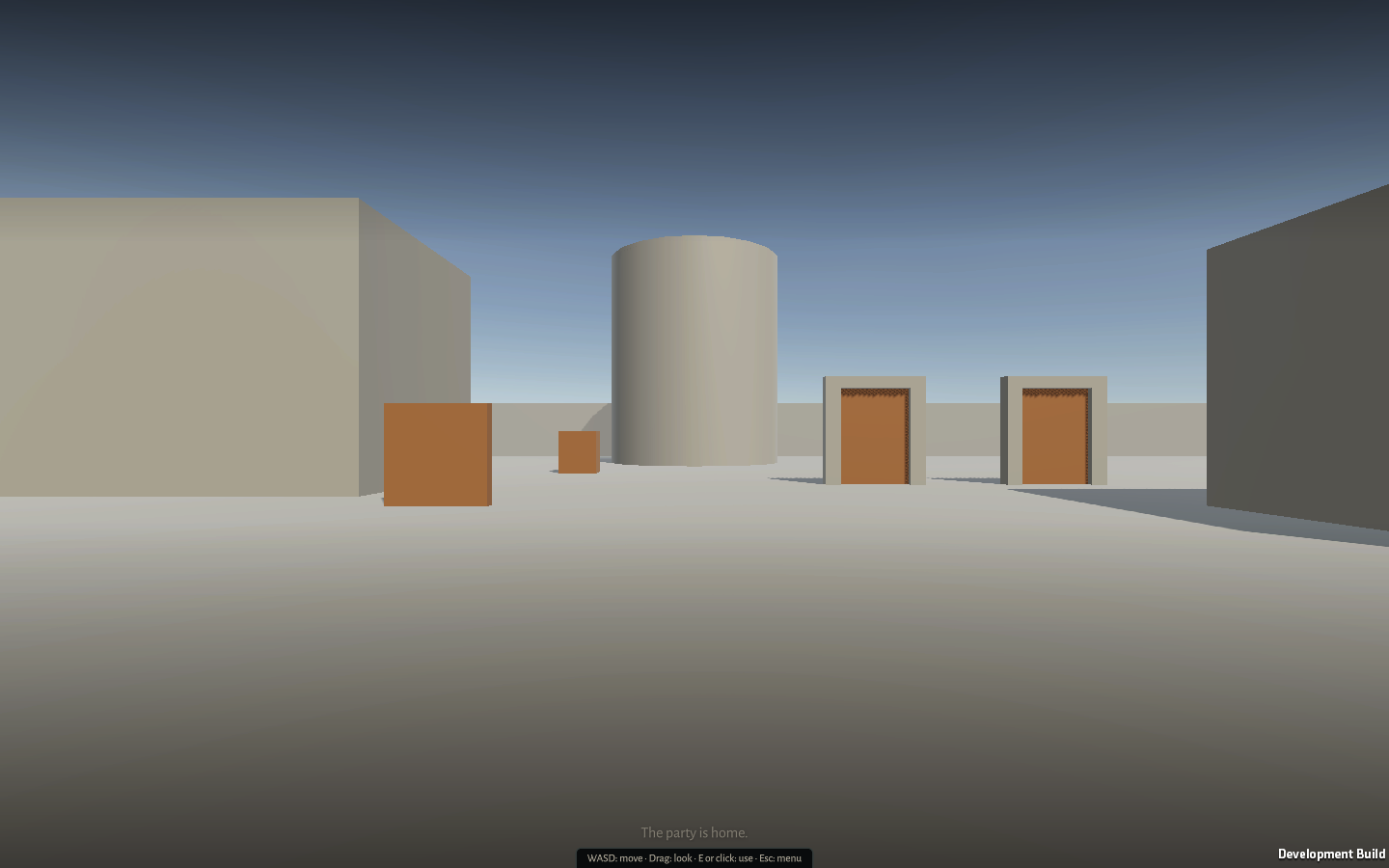
Caelwick right now on my development machine. It's still early geometric blockout—the doorways are portals, and the grey blocks are the shrine and roster board—but walking back into town with a battered squad already feels real.
The climb waits for you
I really wanted to avoid the feeling that retreating is an embarrassing restart or a cheap exploit. When your party decides to leave the tower, your progress doesn't evaporate. The climb waits for you at a portal in town, right at the landing where you walked out.
Enemies you slayed stay dead, treasure chests you opened stay looted, and camps you rested at stay spent. You can't use retreat to infinitely farm resources, but you don't lose the hard-fought ground you earned either.
Even better, the squad you send back in doesn't have to be identical to the one that left. If one of your veterans is badly bruised and needs time in town, you can recruit new blood or bring along a rested hero from your roster to finish the climb.
Survival should leave a scar
When you bring a fallen companion back to the shrine in Caelwick, you can restore them to life. But I was determined that resurrection should never just be a trivial gold fee where a character pops back up good as new. If an adventurer drops in the dark and is pulled back from beyond, that experience should change them.
Every resurrection at the shrine adds soul damage and inflicts a lasting trauma.
The shrine shows you the odds before you commit. The first time an adventurer falls, the outcome is usually gentle—there is a nine-in-ten chance they receive a minor trauma. But as their soul damage accumulates over multiple deaths, the odds shift dramatically. By the tenth resurrection, major life-altering traumas become the expected outcome.
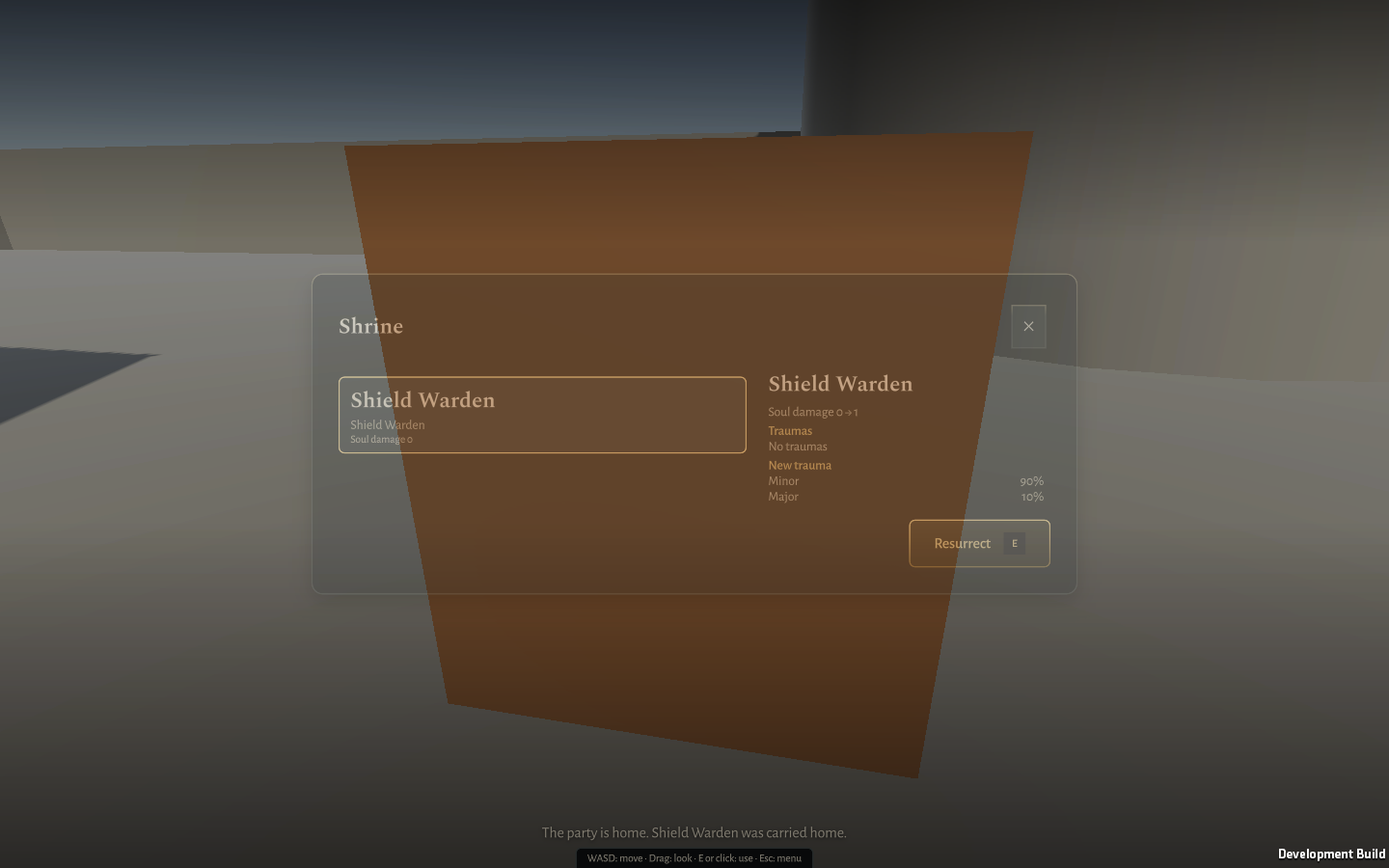
The shrine interface for a hero’s first resurrection.
Right now, I have six initial traumas in testing to see how they feel during long campaigns:
- Grave Chill: The hero carries a lingering chill from the void, lowering their cold protection.
- Frail Heart: The toll of returning permanently reduces a portion of their maximum health.
- Fear of the Wall: Traumatized by taking heavy blows on the frontline, the hero can no longer bring themselves to equip a shield.
- Unsteady Aim: Lingering tremors weaken anything thrown or loosed at range.
Soul damage doesn't have an artificial cap, and the game will never arbitrarily force a character to retire. Even if a hero stacks up multiple traumas, they can still fight. If a trauma would strip away something the character doesn't even use (like losing shield access on a mage), the system cleanly falls back to a general combat penalty instead.
As a player, it forces you to look at your party with empathy and strategy. Do you keep sending your most scarred veteran back into the fray? Do you retool their tactics and gear to work around their new limitations? Or do you let them rest while an eager recruit takes up the mantle?
When the whole party falls
Of course, sometimes an expedition goes completely sideways and nobody makes it back to the stairs. How should the game handle a total party wipe?
Every player has a different relationship with risk and loss. Some love the brutal finality of classic roguelikes; others want a challenging tactical puzzle without losing forty hours of character attachment. Rather than imposing one rigid philosophy, you choose how wipes work when you start your campaign:
- Try the floor again: A forgiving rewind that places your party right back at the entrance of the floor as you first arrived. It lets you rethink your strategy and try the encounter again.
- Return to Caelwick: Everyone is dragged back to town fallen. Your heroes keep their hard-earned experience and levels, but whatever loot was collected on that expedition is lost to the tower.
- Permadeath: High stakes. The entire expedition party is lost forever and your expedition pack is wiped clean. But your campaign doesn't end—the heroes who were waiting back in town are completely safe, and you pick up the pieces with them and new recruits.
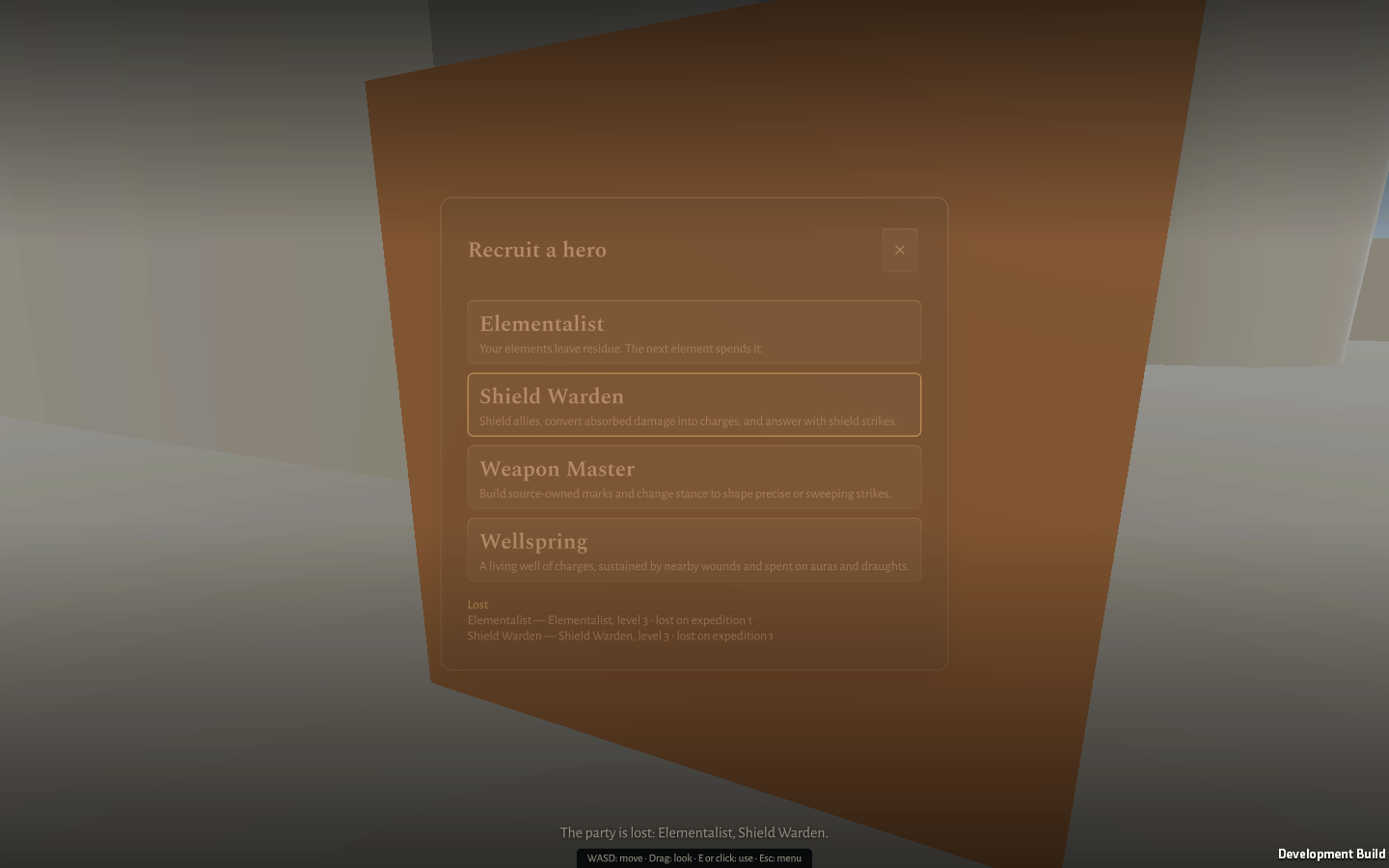
The roster board after a permadeath wipe. Seeing the names of heroes who didn't make it back gives every successful climb real weight.
Under permadeath, the roster board keeps a permanent record of who was lost and which expedition claimed them. Seeing those names commemorated in town turns every fallen hero into a lasting piece of your campaign's history.
What I'm building next
Now that the core loop between the town and the tower is functioning, the next big focus is bringing Caelwick itself to life. The roster board, the shrine, and the tower portals currently exist as simple grey blocks. They work great mechanically, but they need atmosphere.
I'm working on dressing the town with timber houses, warm lantern light, cobblestone pathways, and the sense of a bustling haven huddled right against the shadow of the spire. You can keep an eye on what is playable right now over on the alpha overview.